
“Get in good trouble, necessary trouble,” is a quote the late Congressman John Lewis popularized when discussing the history of the Civil Rights movement.
It was not a call to chaos, but as a call to conscience. In times like these, that phrase feels less like historical perspective and more like a civic instruction.
The recent wave of protests, including student walkouts in Oklahoma and across the country, are not a threat to democracy. Indeed, they are an expression of it.
The First Amendment does not just protect polite speech or comfortable opinions. It protects the right of the people to peacefully assemble, speak out and petition the government when they believe policies are unjust or civil rights are at risk.
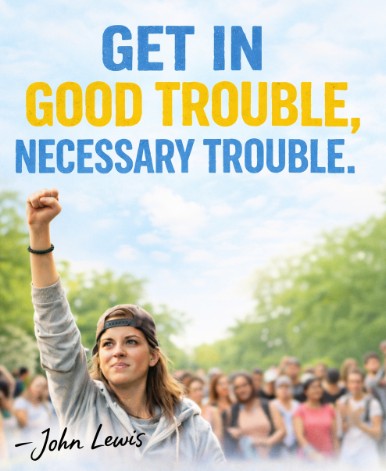
AI generated image
That right has always been central to American progress. From the 1963 March on Washington to the voting rights marches in Selma, peaceful protest has been one of the most powerful tools citizens possess. Lewis himself endured brutal violence on the Edmund Pettus Bridge during Bloody Sunday — not because he sought disruption, but because he understood that silence in the face of injustice is far more dangerous.
Today’s student demonstrations — many of which have been peaceful — fall squarely within that constitutional tradition. When young people hold signs, speak out and stand together on issues they care about, they are practicing civic engagement, not undermining it. It is a sign of a healthy democracy when the next generation feels empowered to participate in public discourse.
What is especially striking right now is the growing but predictable hypocrisy surrounding student protests and free speech. For years, many Republican legislators positioned themselves as defenders of the First Amendment, warning about “cancel culture” and government overreach. Yet when students protest policies those same lawmakers support — particularly on immigration or civil rights — the response suddenly shifts toward restricting walkouts or attempting to silence student voices.
“Good trouble” does not mean violence or recklessness. It means responsible, peaceful resistance grounded in principle. It means using lawful protest to draw attention to policies people believe erode democratic norms or basic civil liberties.
Now, to be clear, if students leave campus or disrupt school operations, I understand why school districts may enforce reasonable rules and accountability. Actions have consequences, and that is part of the civic lesson as well. But it is one thing for schools to manage discipline and quite another for legislatures to step in and attempt to stifle peaceful expression through reactionary laws.
Democracy is not passive. It requires participation, vigilance and moral courage. Peaceful protest — when done responsibly — is not disorder. It is citizenship in action. And when people believe their rights or democratic institutions are being eroded, exercising the constitutional right to peacefully protest is the very definition of good trouble.
 Cindy Allen